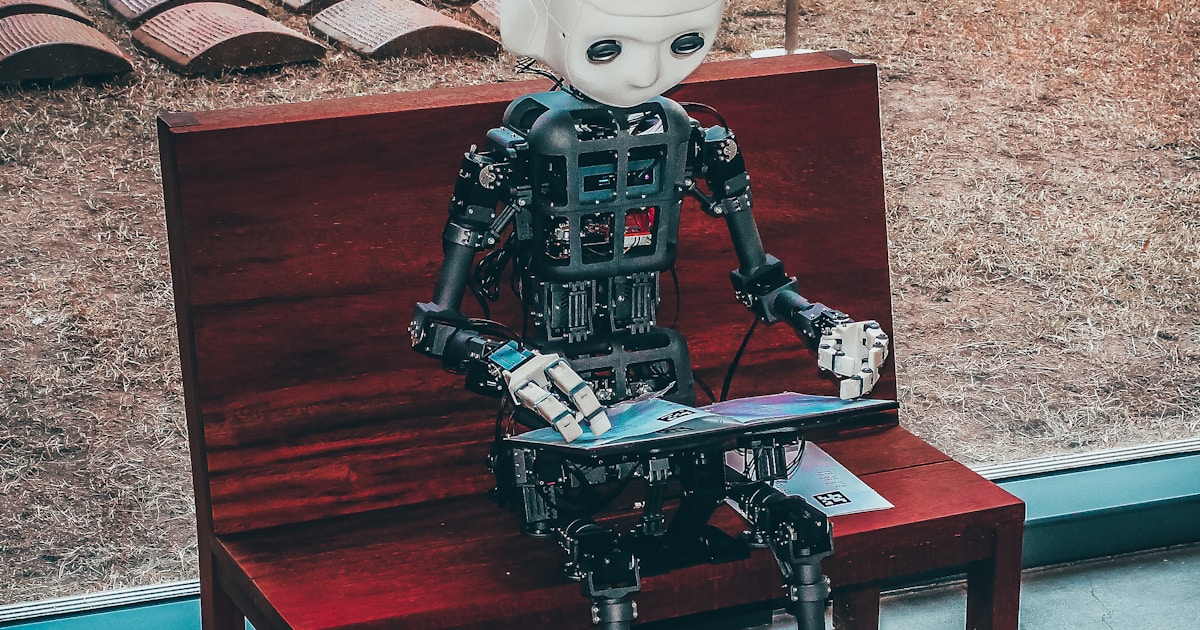
What if you could text your computer from your phone and have an AI handle the rest? That's the exact promise behind Dispatch, Anthropic's new feature built into Cowork, its desktop automation tool. Announced on March 17, 2026, Dispatch marks a significant milestone in Anthropic's vision: turning Claude into a true autonomous desktop assistant that can act on your machine while you're doing something else entirely.
What exactly is Dispatch?
Dispatch lives within Anthropic's Cowork ecosystem — the desktop application that allows Claude to interact directly with your computer: browse files, use applications, run scripts. Until now, Cowork required you to be sitting in front of the screen. Dispatch changes the game: you can now kick off a task from your smartphone, go run errands, and come back to the results.
In practice, Dispatch creates a persistent conversation thread between your phone and your computer. You send an instruction, Claude receives it on the desktop, executes it with all available tools, and sends the result back to your mobile. It's like having an assistant who stays at the office while you step out.
How it works: setup and pairing
The setup is deliberately simple — Anthropic is clearly targeting a non-technical audience. Here are the steps:
- Update [Claude Desktop](https://claude.ai/download) to the latest version with Cowork built in.
- Install or update the Claude mobile app on your smartphone (iOS or Android).
- Scan the QR code displayed in Claude Desktop from your mobile app.
- You're all set. A synchronized conversation thread appears on both devices. Everything you send from mobile gets executed on the desktop.
Use cases: what Dispatch can already do
Anthropic highlights several practical scenarios where Dispatch already shines:
- Data extraction — Ask Claude to pull key figures from an Excel spreadsheet and generate a summary report.
- Briefings and catch-ups — Claude scans your emails and Slack messages to prepare a summary of what you missed.
- Presentation building — From documents on Google Drive, Claude can assemble a structured PowerPoint deck.
- File organization — Sorting, renaming, and categorizing folders based on your criteria.
- Document research — Claude searches your local documents to find specific information and synthesize it.
Dispatch vs Claude Code Remote: what's the difference?
If you've been following Anthropic's recent launches, you may have heard of Claude Code Remote, released a few weeks earlier. Both tools share a common philosophy — "start a task and come back later" — but target very different audiences.
| Criteria | Claude Code Remote | Dispatch (Cowork) |
|---|---|---|
| Target audience | Developers | General public / professionals |
| Interface | Terminal (command line) | Mobile app |
| Environment | Code, repositories, CI/CD | Full desktop (files, apps, browser) |
| Skills required | Technical (dev/ops) | None — everything is in natural language |
| Access method | SSH / remote tunnel | QR code from mobile app |
| Primary use case | Automate code and deployments | Automate office tasks |
Claude Code Remote vs Dispatch: two complementary approaches
In short: Claude Code Remote is for developers, Dispatch is for everyone else. Anthropic is progressively building an ecosystem where Claude can act in any context — whether it's a terminal, a desktop, or a smartphone.
Current limitations: an honest look
Dispatch is in research preview, and it shows. Several testers — including journalists from MacStories — have flagged real issues you should keep in mind before diving in.
- Search and synthesis: works well. Tasks that involve reading, analyzing, and summarizing information perform reliably. Claude excels at digging through documents and extracting the essentials.
- Concrete actions: unstable. Sending a file, interacting with a third-party app, managing browser tabs — these tasks often fail or produce unpredictable results.
- Latency. There's a noticeable delay between sending an instruction and execution starting. For simple tasks, it can feel slow.
- Computer must stay on. Dispatch runs tasks directly on your machine. If your computer is asleep or off, Claude can't do anything. There's no cloud mode.
- No notifications. You don't get alerted when a task finishes. You have to check manually.
- Single thread only. You can't run multiple tasks in parallel. Only one active conversation thread between mobile and desktop.
What this means for the future of desktop AI
Dispatch is more than just a feature. It's a strategic signal from Anthropic about where AI is heading: out of the chat window and into your actual digital environment as an agent that takes real action. The fact that this vision is now accessible from a smartphone — with zero technical skills required — is a turning point.
We're starting to see a future where AI isn't a tool you consult, but a persistent collaborator working in the background. Today, Dispatch is limited to a single thread and simple tasks. But the foundations are laid for something far more ambitious: an assistant that manages your email, organizes your calendar, prepares your meetings, and anticipates your needs — all from your pocket.
To understand how Claude stacks up against competitors like ChatGPT and Gemini, check out our full ChatGPT vs Claude comparison. And if you're migrating from another assistant, our guide on importing your memory into Claude might come in handy.
“Dispatch turns Claude into a colleague who stays at the office when you leave. Today it's a limited preview. Tomorrow, it could redefine our relationship with digital work.”
Compare AI assistants
Frequently asked questions
Stay up to date with AI news
Get our latest analysis on AI innovations, delivered straight to your inbox.
No spam. Unsubscribe in 1 click.
Read our full review of Claude
Features, pricing, comparison with ChatGPT and Gemini — everything you need to know about Anthropic's AI assistant.
See Claude reviewClaude vs ChatGPT: the full comparison
Discover the strengths and weaknesses of each AI assistant in our detailed analysis.
Read the comparison